02 Deep Dive & Timeless Techniques
From Ancient Torches to Medieval Chandler Guilds
The chronicle of wax crafting begins in antiquity. While early Mediterranean peoples developed rushlights by soaking pithy reeds in molten animal fats, Roman craftsmen pioneered rolled papyrus wicks dipped repeatedly in tallow and crude beeswax. Across winter nights, illumination dictated daily life, prompting artisans to test varied plant extracts and insect secretions to sustain dependable flames.
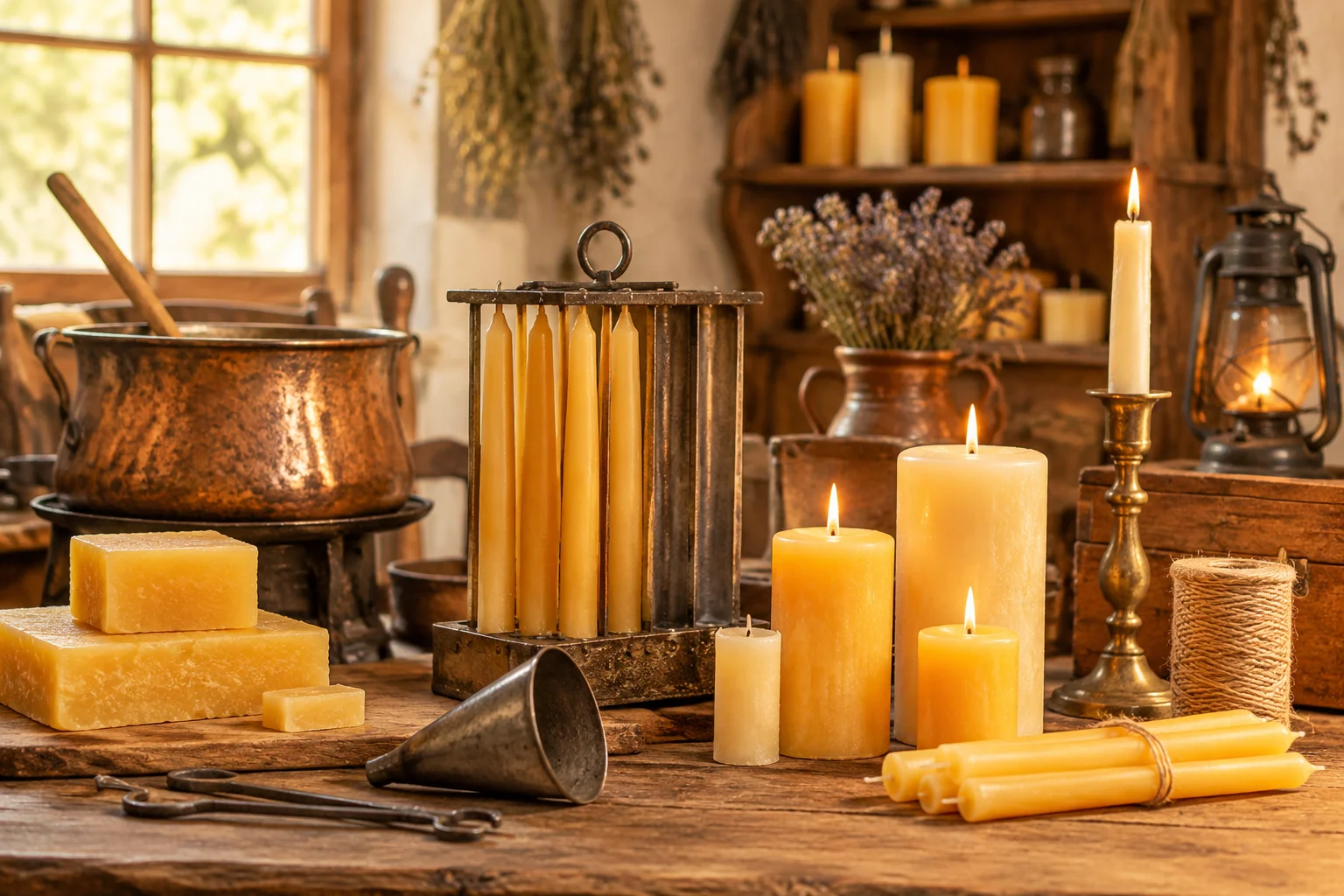
By the Middle Ages across Western Europe, candle making evolved into an esteemed guild craft. Chandlers traveled settlement to settlement refining rendered tallow, or established dedicated workshops for ecclesiastical commissions. Because refined beeswax burned cleanly with a delicate honeyed perfume without acrid soot, it was reserved primarily for royalty, grand banquet halls, and holy cathedrals, leaving smokier tallow candles for commonplace domestic dwellings.
A flame loses nothing by sharing its light, just as the ancestral wisdom of the chandler continues to guide our contemporary studios.
— Traditional Chandler Proverb
The Nineteenth-Century Chemistry Leap and Modern Renaissance
The nineteenth century altered wax crafting irrevocably. In the 1820s, French chemist Michel Eugène Chevreul isolated stearic acid, giving birth to harder, cleaner-burning candle compositions. Soon after, plaited cotton wicks replaced twisted cordage, eliminating the continuous need to snip charring wicks manually. With the subsequent industrial emergence of refined paraffin in the mid-19th century, candles turned accessible for all households, gradually transitioning from utilitarian lighting to symbols of atmosphere, meditation, and relaxation.
- Etruscan and Roman dipped beeswax cordage established the earliest modular taper candles.
- Medieval Chandler Guilds standardized pouring temperatures and tallow refinement techniques.
- Plaited cotton wicks curved outward as they burned, creating self-trimming combustion.
- Late 20th-century botanical wax breakthroughs reintroduced renewable soybean and coconut bases.
Today, boutique candle making honours these historical foundations while embracing modern clean-burning botanicals. Contemporary candlemakers blend sustainable soy waxes, wooden wicks, and pure essential essences, bridging centuries of ancestral hand-pouring methods with modern wellness and mindful living.
Four Classical Stages of Hand-Crafted Candle Making
While industrial factories produce high volumes through mechanical extrusion, authentic boutique studios still observe the meticulous four-stage rhythm established by historic chandlers.
Wax Melting & Tempering
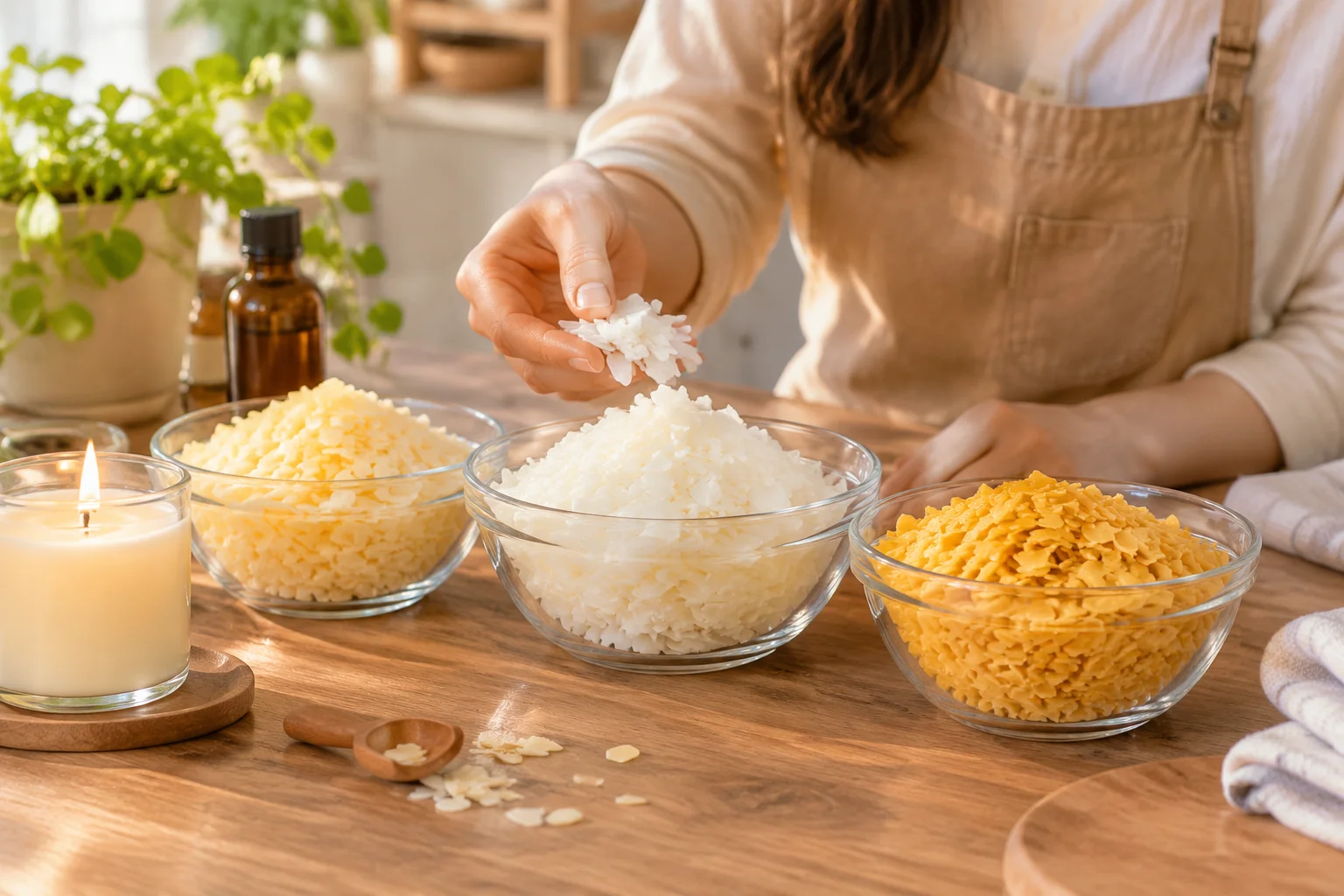
Heat raw botanical or beeswax flakes steadily in a gentle water bath to achieve the optimal molecular pour temperature without scorching the delicate fatty acids.
Wick Centering & Anchoring
Secure an untreated braided cotton or wooden wick flush against the vessel basin, tensioning it vertically to prevent uneven melt pools during burns.
Aromatic Infusion & Decanting
Gently blend premium botanical essences at a verified flash point, pouring the liquid wax along the vessel wall in a calm, deliberate stream.
Curing & Cold Conditioning
Allow the vessel to rest at stable room temperature for up to two weeks, letting the crystalline wax structure set for a uniform, long-lasting throw.
Frequently Asked Questions About Wax Crafting Heritage
Rendered animal tallow produced heavy smoke, unpleasant kitchen odors, and melted rapidly in warm rooms. In contrast, pure beeswax burned with an amber, steady flame and released a faint honey aroma without emitting harsh soot, making it the coveted choice of nobility and cathedrals.
Soy wax was developed in the early 1990s as a sustainable, plant-based alternative to petroleum paraffin. Handcrafted candlemakers rapidly embraced hydrogenated soybean oil for its slow, clean burn rate and exceptional cold fragrance retention.
Early candles used loose hemp, papyrus, or twisted raw fibers that smoked profusely and required frequent trimming with snuffing shears. The invention of the flat braided cotton wick in 1825 enabled the wick to curl slightly toward the flame edge, naturally incinerating its own tip.